Do you love cats? 🐾
Then this sheet is for you! In this lesson, we’ll explore some useful Hungarian words related to owning and caring for a cat — from scratching posts to fur brushes, and everything in between. Get ready to boost your vocabulary while celebrating our feline friends!

Let’s start with something fun!
Listen to the Hungarian word, then click the picture that shows what it means.
Ready to test your ears and instincts?

Now, you know what the Hungarian words are. Let’s confirm them with this game: pull the English translations onto the right picture.

Let’s twist it a bit!
Listen to the Hungarian words again, and write the English translation(s) next to them.
Sometimes there’s more than one correct answer. 😉

Now it’s time to practise and memorise the words!
You can see them one by one in English – push the button to speak and see if it’s correct. If you’re stuck, you can play the hint for help.
Tip: Try repeating this activity a few times — using the hints less and less each round. 🙂

Once you’ve practised these words a bit, why not try making a few sentences?
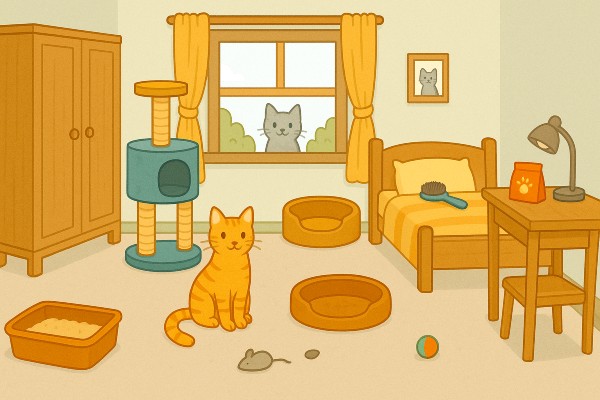
No pressure — your level is exactly right for this kind of challenge! You can even use the picture to help spark your ideas.
(Sorry — I can’t check them for you.)
And remember! If you don’t know enough words or grammar yet, you can always do some
PatchPhrasing

And finally, the list of words used on this page:
| 🇭🇺 Magyar | 🇬🇧 Angol |
|---|---|
| cica | kitty / cat |
| kaparófa | scratching post |
| jutalomfalat | treat |
| macskajáték | cat toy |
| macskabútor | cat tree |
| macskaágy | cat bed |
| szőrkefe | grooming brush |
| egér | mouse |
| kijárós macska | outdoor cat |
| szobamacska | indoor cat |
| csörgős labda | jingle ball |
| macska wc | litter box |